- AI udvikler sig mod en "Synthocene Era", hvor teknologi styrker mennesker frem for at kontrollere dem, med empatisk AI som mentor og ledsager.
- Brands skal prioritere kvinders sundhed og reagere på GLP-1 lægemidlers indflydelse på forbrugervaner inden for fødevarer og livsstil.
- Mode- og luxusbranchen skal gå fra blot at minimere skade til aktivt at skabe positiv forandring gennem cirkulær økonomi og bæredygtigt lederskab.
What are the key consumer attitudes topics to know in 2025? In this special partnership article, The Future Laboratory shares an excerpt from its latest macro trend briefing: ‘Future Five 2025’ that highlights the most important trending topics, the key insights, opinions and future strategic growth opportunities that brands need to know about right now.
The world is changing at an unprecedented rate. Technology is advancing daily and the cultural and demographic landscape shifts so rapidly that comprehending the present is challenging enough for brands and businesses, let alone planning for the future.
“At the core of this report is a unifying concept: the search for balance. Through five carefully curated topics, we emphasise the importance of harmonising the vast potential of technology – particularly AI – with the irreplaceable aspects of human creativity and emotion. We also highlight the need to embrace a holistic approach to wellness, and balance progression with adaptability, when designing future spaces.”
Fiona Harkin, director of foresight, The Future Laboratory
These are the five topics we think are crucial for brands to understand and address in 2025:
- Artificial Intelligence: As humanity embraces an inevitable partnership with AI, we focus on the need to create a protopian future in which technology empowers rather than enslaves us.
- Future Spaces: We explore how wellbeing, sustainability and technology will all be key in creating adaptable, people-centric and future-proof spaces that allow communities to thrive.
- Gaming: As the gaming community extends beyond the stereotypical image of the white, male gamer, we consider the industry’s diversity challenges and highlight opportunities for engaging Gens Z and Alpha.
- Longevity: With global spending on wellness spiralling upwards, we spotlight the need to eradicate the historic gender health gap while addressing trends such as GLP-1 weight loss drugs and consumer demands for elevated wellbeing experiences.
- Sustainability: We emphasise the need for brands to up the ante in their climate activism, creating tangible positive change in the fashion and luxury industries rather than merely minimising harm.
Artificial Intelligence
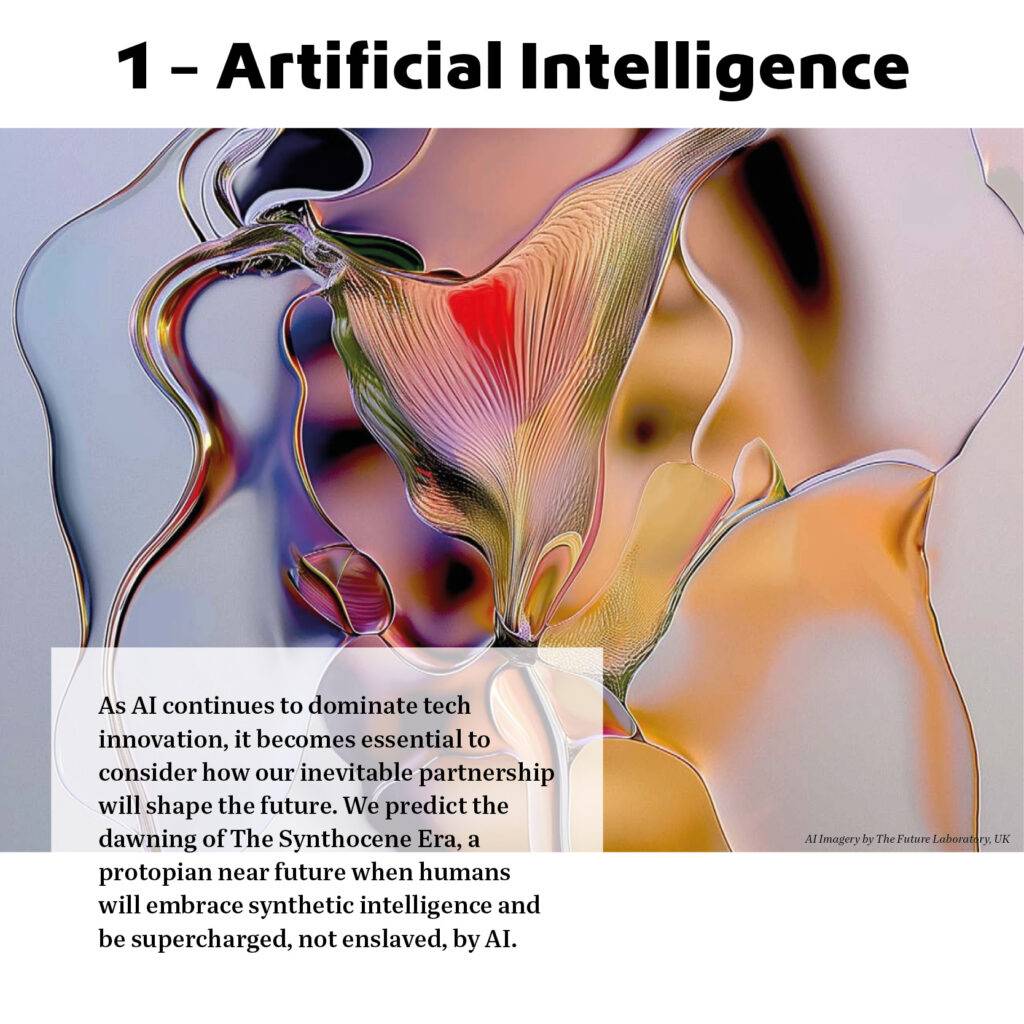
As AI continues to dominate tech innovation, it becomes essential to consider how our inevitable partnership will shape the future. We predict the dawning of The Synthocene Era, a protopian near future when humans will embrace synthetic intelligence and be supercharged, not enslaved, by AI.
By 2025 we expect wider adoption of empathetic AI that acts as a companion and mentor. Despite Apple Vision Pro’s commercial failings, this will inspire entertainment brands, retail brands and beyond to explore spatial computing’s capacity to create unique and differentiating moments that wow consumers.
Welcome to the Synthocene Era
Today, the term ‘intelligence’ frequently comes with the prefix ‘artificial’. But, as humans harness advancing technologies – from AI and quantum computing to biotech and genetic engineering – what are the prospects for human intelligence in 2025 and beyond, and what does this mean for the way individuals think, behave, work and live? We believe it is time to acknowledge the beginning of a new synthetic era, powered by our inevitable partnership with AI, and to begin building towards a protopian future where humans are supercharged, not enslaved, by technology.
During this Synthocene Era, Expanded Humans will be empowered by the synthetic layers and intelligence of technology as they find new solutions to the biggest macro-threats facing humanity and navigate the day-to-day challenges of life with added seamlessness, confidence and individuality.
This era is already upon us, with AI-powered solutions that are better for people and the planet beginning to abound. Chilean food tech company NotCo, for example, recently became the country’s first unicorn when it was valued at €1.39bn. NotCo uses AI to find unexpected combinations of plant-based ingredients to create healthier and more sustainable alternatives to animal-based products.
Empath-AI tech
While discussing its latest research project, Tenderithms, at the Softer Digital Futures tech conference, design collective Feminist Internet posed the question: ‘As our physical and digital selves merge deeper, how could we add more tenderness to technology and what would an algorithm that looks after you look like?’ This is quickly becoming an essential question as we become increasingly comfortable with the idea of having empathetic relationships with AI.
Amsterdam agency Modem considered this as part of a collaboration with first-time parents and Danish art and design duo Wang & Söderström to imagine a future in which children will learn from intelligent and personalised tutors. Its My First AI project envisages AI-powered stuffed animal GPTeachers offering personalised exercises that correspond to a child’s developmental stage, personality, mood and learning style.
Nvidia and Hippocratic AI have already launched AI-powered healthcare agents, which they claim now perform better than human nurses when it comes to bedside manner, empathy, trust and rapport. The AI nurses provide real-time support for pre-and post-operation check-ins and act as loneliness companions. Empathetic AI is also starting to play a role in romantic relationships.
More than three-quarters of Millennials (76 percent) and 81 percent of Gen Z would use an AI bot to help them flirt on a dating app, according to a report by Cosmopolitan magazine and dating app Bumble, while some 10 percent of interactions with AI chatbots have an erotic undertone, according to ZDnet.
Empathetic AI has the potential to add companionship, mentorship and support to offset the loneliness epidemic while filling intimacy gaps, but there are ethical concerns to consider. While privacy is a potential problem, we must also ensure that the technology is supporting and empowering people, rather than controlling or alienating them.
Future Spaces
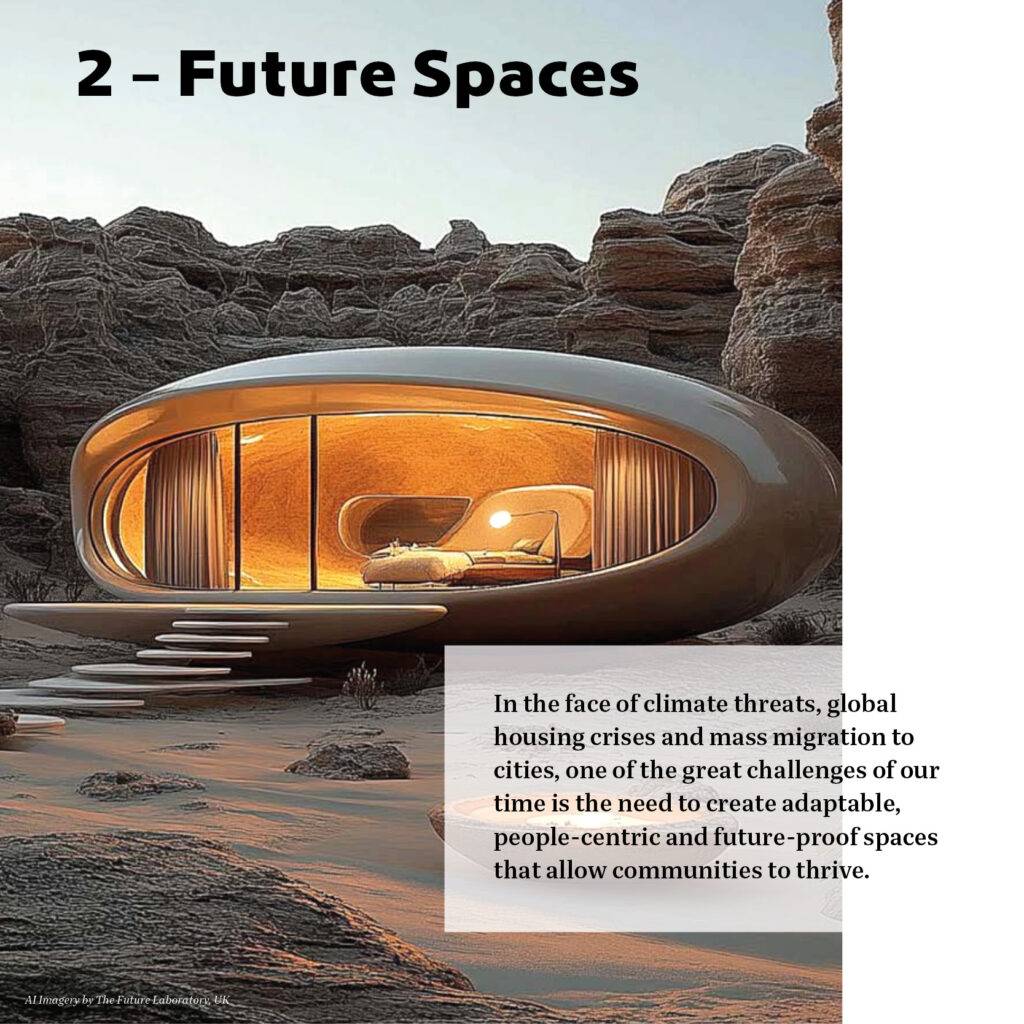
In the face of climate threats, global housing crises and mass migration to cities, one of the great challenges of our time is the need to create adaptable, people-centric and future-proof spaces that allow communities to thrive.
In 2025, we expect placemakers to reconsider the need for wellbeing environments that heighten our emotions, as well as soothe them. Immersive technology will add extra levels of personalisation and adaptability to the home and the public sphere, while the design principles of modularity and retrofitting will proliferate in neighbourhoods around the world.
Healthy hedonism
The latest projections from Statista suggest that the global wellness market will be worth €6.3 trillion by the end of 2024 and will grow to €7.82 trillion in 2027. Going hand in hand with this unstoppable rise is the almost unchallenged consensus that wellness equates to calmness and spending time in green and blue zone spaces. But when creating spaces to help people thrive, we must complement these calmer pursuits with environments that get our pulses racing and provide a more rounded approach to wellbeing.
Professor Des Fitzgerald, the author of ‘The living city: Why cities don’t need to be green to be great’, believes this fixation with calmness is shielding our attention from other valuable aspects of wellbeing. On the subject of placemaking he argues: ‘We need to consider how the more excitable, heightened emotions can actually be critical for people too in maintaining psychological wellbeing.’
This underlines the wellbeing value of spaces and experiences that heighten our emotions, releasing adrenaline, endorphins and oxytocin, or which provide moments of effervescence via cheek-by-jowl communal opportunities.
Dr Tasha Golden, director of research at the International Arts and Mind Lab at Johns Hopkins University, also believes that art plays a key role in delivering complete wellbeing. Her Art on Prescription field guide highlights the transformative impact that art, music and dance can have by ‘connecting people with opportunities to express, to connect, to pursue something that’s meaningful to them’.
Having a full-spectrum, holistic view of wellness does not denigrate or downplay the importance of blue and green zones, but re-affirms that they will play a crucial part in the wellness spaces of the future in concert with more arousing elements. Global wellbeing organisation Therme is set to open the UK’s first city-based blue zone wellness resort in Manchester in 2025, drawing on ‘deep-rooted traditions of wellbeing based on water and heat’ combined with ‘modern evidenced-based wellbeing, technology, culture and nature’.
It is by juxtaposing moments of calmness and reconnection with nature with experiences that excite us and elicit cultural creativity that we can build spaces supporting the complete wellbeing of people.
Regenerative modularity
Once reserved for eco-anxious high-end clients or architects creating stunning and sustainable single dwellings, regenerative design is now a mainstream necessity as we tackle the housing and climate crises of the coming decades. According to a UN report, two out of three people are expected to live in cities or other urban centres by 2050, as temperatures rise and scarce ress accelerate the global exodus from rural spaces. This will worsen the current housing crisis in densely populated cities such as Tokyo and New York, heightening the need to embed regenerative thinking into entire cities and neighbourhoods.
This growing need is illustrated by the projected rise of the global green buildings market during the next decade. Estimated to be worth €477.2bn in 2023, it is expected to be around double that size by 2033, increasing to €1.16 trillion (source: Precedence Research). Architectural and design firms are rising to the challenge to create next-generation developments that are both energy-efficient and more adaptive to the needs of people and the planet.
In February 2024, development company Human Nature received planning approval to transform a former industrial site in Lewes, UK, into 685 timber-based homes. As well as using locally sourced timber and biomaterials such as hemp in its construction, it will be powered by renewable energy sourced from on-site photovoltaic panels and an off-site renewable energy facility, making it the UK’s most sustainable neighbourhood ever.
This always-in-beta mindset that leans into the principles of modularity, retrofitting and community decision-making will be essential to creating regenerative spaces that are adaptive and people-centric enough to meet the challenges ahead. Brands also have an opportunity to help consumers embed these ideals into their living spaces.
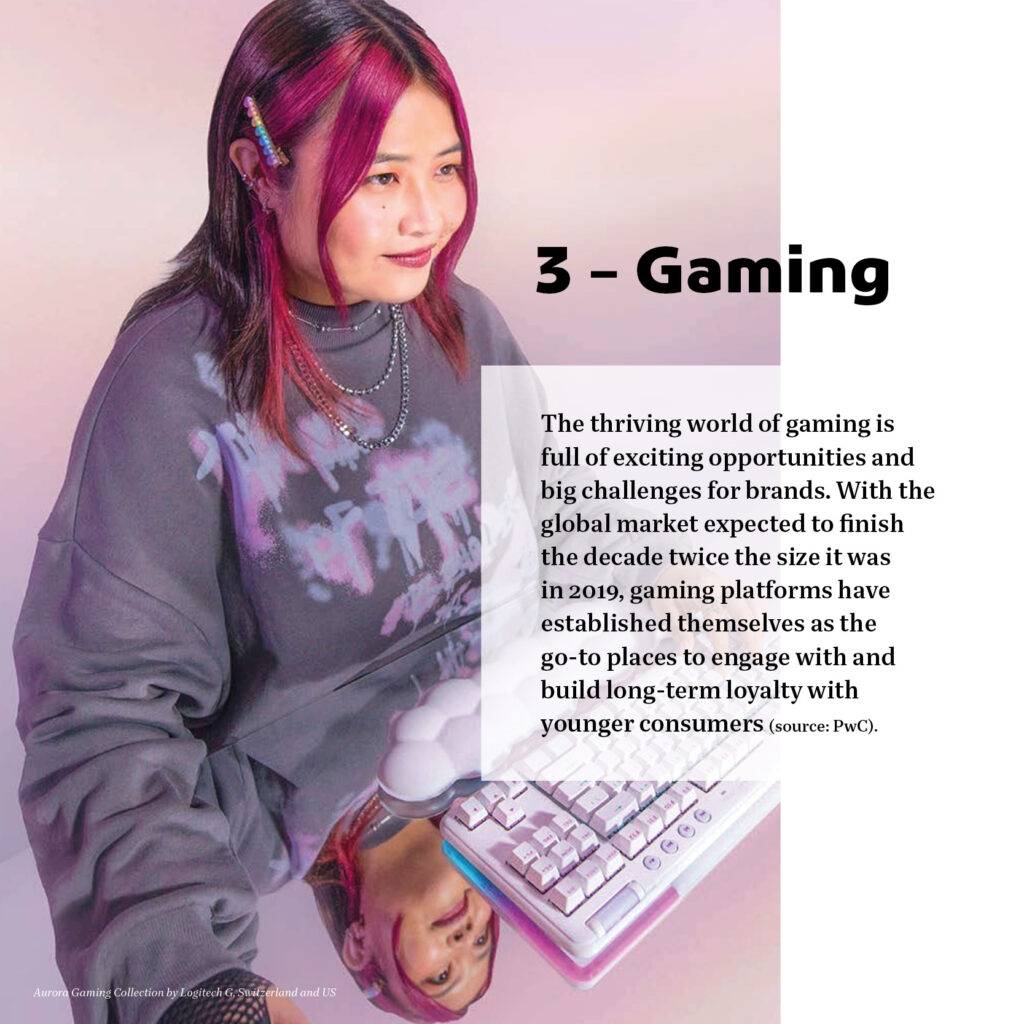
Gaming
The thriving world of gaming is full of exciting opportunities and big challenges for brands. With the global market expected to finish the decade twice the size it was in 2019, gaming platforms have established themselves as the go-to places to engage with and build long-term loyalty with younger consumers (source: PwC).
Brands across all sectors will take advantage of that opportunity in 2025, while the need to double down on diversity and build experiences and game play that are more representative of the community remains a priority. This is particularly true at a time when women gamers look poised to become gaming’s dominant demographic.
The future of gaming is female
While the tired stereotype of the typical gamer as an energy drink-fuelled male sitting in a dark room lit only by the light of their monitor proliferates, the rise of the female gamer is in full flight and is helping to reshape the future of the sector.
A report from the Geena Davis Institute on Gender in Media found that women now make up almost half of gamers glo-bally, including 46 percent in the US, 47 percent in Europe, 48 percent in Australia and 37 percent in Asia. SupplyGem estimates that there are now 1.39bn female gamers in the world, while it is also predicted that the women gamer demogra-phic will continue to grow at an unprecedented rate of 33 percent annually (source: Forbes).
This suggests that we are fast approaching the tipping point when Women who Play will become the dominant demographic in the gaming industry. This changing of the guard is shaking the foundations of gaming, re-imagining where, how and why people are gaming. A key driver of the change has been the accessibility of mobile games, which account for 61 percent of the entire gaming market (source: Data.ai, International Data Corp), with nearly half of mobile players now women (source: Forbes).
Self-expression is a key driver of why women game, and research has shown that they spend more money on games consoles, downloadable content and gaming accessories than men, averaging €331 annually on downloaded content and accessories (source: Treasure Data). Thus, games that offer more extensive in-game personalisation, such as skins and character customisation, are more attractive to women gamers, with 85 percent of female Fortnite players purchasing downloadable content (source: Treasure Data).
Fortnite capitalised on this appeal with its Celebration of Women campaign in late 2023. In addition to a series of cosmetics rewards, it unveiled seven islands (maps) created by women from the Fortnite community. In this way, Fortnite not only gave users greater control over their individual characters, but also allowed women gamers to create their ideal in-game experiences.
Turning their backs on the high-octane roots of gaming, women gamers are also using their play time as an extension of their broader wellbeing routines, with 67 percent in the US and UK saying gaming has become a vital source of ‘me time’ (source: Pollfish, Pocket Gamer). This coincides with the rise of more cosy gaming, which typi-cally involves slow-paced, gentle game mechanics with calming music and relaxing ‘missions’.
Brands have an opportunity to help women gamers reshape the industry. Co-creation with communities is the first step in empowering women gamers to express themselves, while giving them the tools to create the spaces, characters and representation that they want.
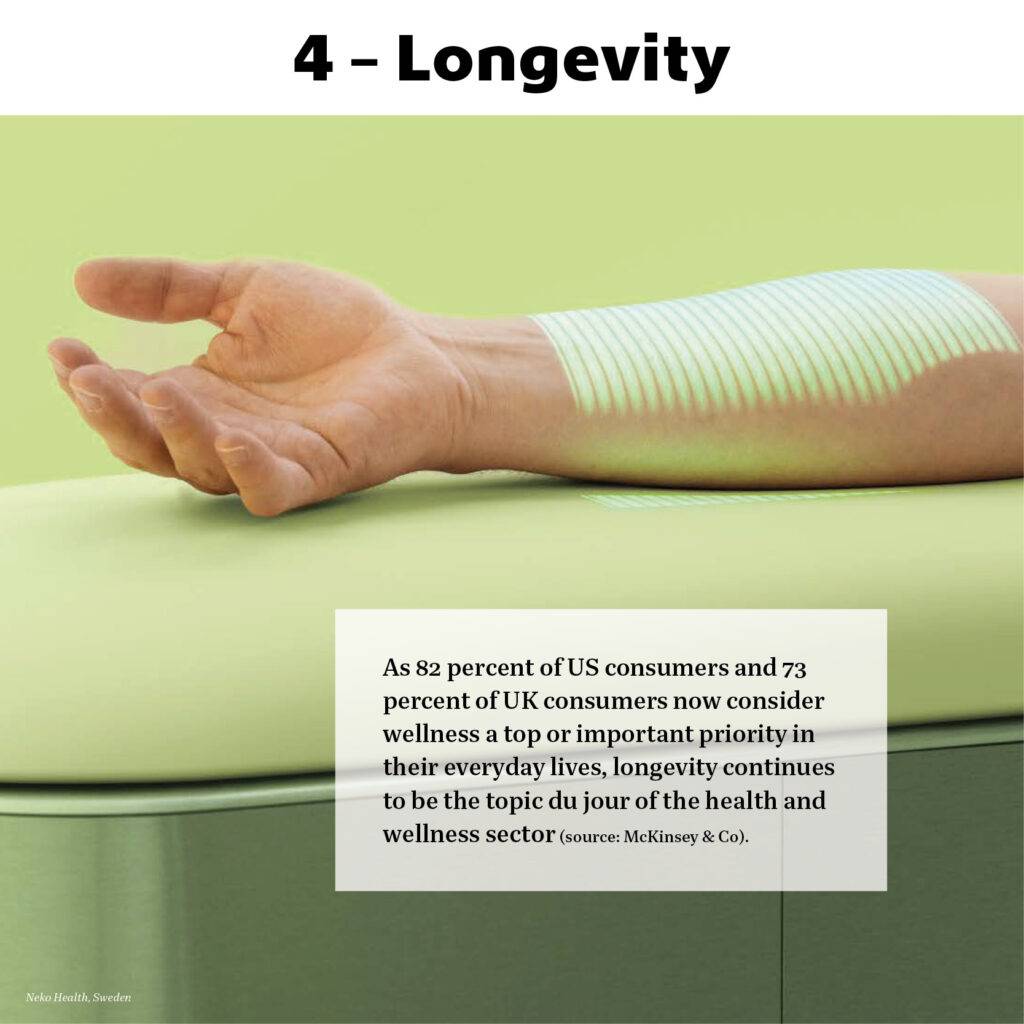
Longevity
As 82 percent of US consumers and 73 percent of UK consumers now consider wellness a top or important priority in their everyday lives, longevity continues to be the topic du jour of the health and wellness sector (source: McKinsey & Co).
In 2025 we expect brands in many categories to adapt in response to the opportunities and challenges of the age of GLP-1 diet drugs, while hospitality and lifestyle brands will reposition their products and services to help consumers reach elevated wellness peaks. Healthcare companies must also prioritise innovations in women’s health, working to eradicate the gender health gap.
Eliminating the gender health gap
A long overdue healthcare revolution is gathering pace that aims to eradicate the gender health gap by prioritising research, innovation, products and services specifically focused on improving women’s health.
While women’s health may vary across the globe, one universal truth is evident: the current system has let women down, leaving them underserved by male-focused mainstream medical services and brands. Dr Somi Javaid, founder of US-based women’s health clinic HerMD, which aims to reverse this historical trend, uses the inadequacy of US menopause care to highlight the wider problem. ‘We’re going to spend 40 percent of our lives in menopause,’ she says. ‘And yet fewer than 20 percent of US providers are trained and 93 percent of medical residents graduate saying they’re not comfortable taking care of patients in this area.’
A new generation of femcare innovators are emerging to empower women to take charge of their health and wellbeing. Central to these innovations is data-powered, personalised insight based on a more nuanced understanding of life-stage biologies and physiologies. Femtech start-up Daye, for example, has opened a digital period pain clinic to help accelerate the path to diagnosis for gynaecological issues. After answering a questionnaire, users receive support for conditions such as endometriosis and PCOS, and advice on how to reduce the intensity and duration of menstrual cramps.
There is also an increased focus on hormonal health. In the UK, self-care-focused wellness brand Eyeam sells Hormone Check Drops that, taken once a day, promise to regulate hormone levels. Similarly, Fewe offers a range of products based on the varying hormonal needs of women during what it defines as the four stages of the menstrual cycle.
With advances in science and AI, it is easy to imagine a future when personalised formulations based on hormonal testing will be available on demand to respond to women’s long-term and real-time needs. This must include a much more considered and tailored approach to making testosterone, still considered the male hormone, easily available to women.
It is time to prioritise the inclusion and comprehension of women in healthcare, engaging in direct communication and tailoring designs and services to provide accurate and life-enhancing healthcare.
Ozempic tremors
A recent report from Goldman Sachs suggests that there could be 70m global users of GLP-1 weight-loss drugs like Ozempic by 2028, while Bank of America is forecasting that one-seventh of the US population (48m people) could be using them by 2030. With these medications reducing calorie intake by up to 30 percent, according to Morgan Stanley, an adoption curve this steep promises to send tremors across multiple consumer categories.
A study by Bernstein examining the dietary preferences of GLP-1 patients reveals a shift towards protein-rich, low-carb options and home-made meals. Another study confirmed that people using GLP-1 medication spend less money in grocery stores, mainly cutting back on bakery items and snacks (source: Numerator).
These significant consumer preference swings create big implications for fast moving consumer goods (FMCG) and consumer packaged goods (CPG) food and beverage and fast food brands. Nestlé is one of the first global giants to respond by developing the Vital Pursuit range of portion-controlled meals to provide GLP-1 patients with nutritional support.
With other analysts predicting implications for airlines, fashion labels and plastic surgeons, all brands must keep an eye on Ozempic tremors to spot the potential challenges and opportunities.
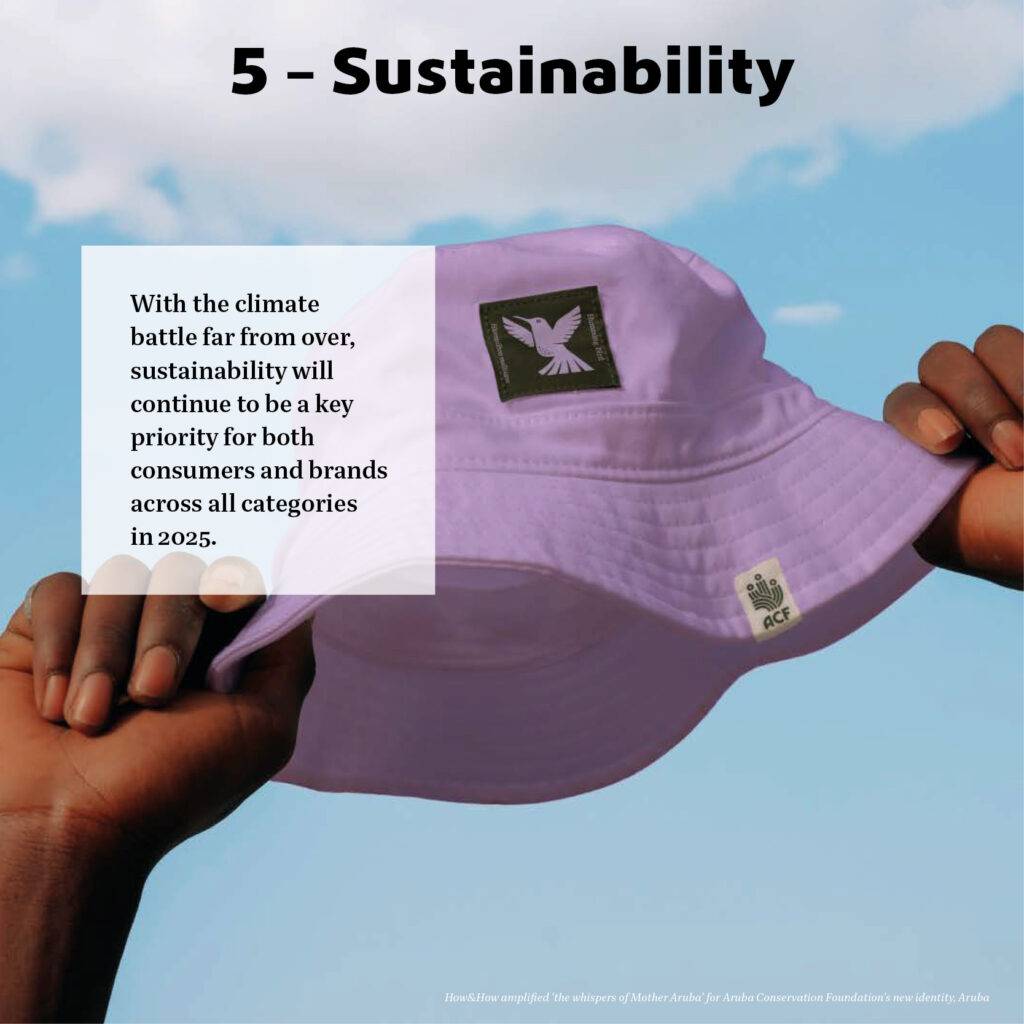
Sustainability
With the climate battle far from over, sustainability will continue to be a key priority for both consumers and brands across all categories in 2025.
In fashion, we hope to see the dawn of a new era of bold leadership to break through the current malaise and re-orientate the industry around circularity. In the travel and hospitality sector, we expect brands to innovate to absorb the shock of climate-related changes in consumer travel behaviour and believe more brands will embrace softer design codes to lure Gen Z outdoors and engage them in conservation and climate activism.
Positively good fashion futures
At the 15th Global Fashion Summit in Copenhagen in May 2024, there was a palpable frustration among the industry’s big hitters about the lack of progress made on sustainability since the inaugural event in 2009. Sustainability author Brooke Roberts-Islam best summed up the mood of resignation, saying: ‘We’re going to talk about all the same things we talked about last year. The footprint of the industry has gone up. Isn’t that what we’re trying to stop? What are we actually achieving?’
Despite survey after survey highlighting consumers’ demands for sustainable fashion, the fast fashion market continues to grow at an alarming rate. Statista valued the global fast fashion market at €98bn in 2022, and it projects that it will be worth nearly €171bn in 2027, more than double the size of the market at the start of the decade (source: Statista). And it is not just wavering consumers who are to blame for the lack of progress; just 38 percent of brands are transparent about their circularity programmes, while 88 percent refuse to disclose production volumes (source: Fashion Revolution’s Transparency Index 2023).
These disparities underline the need for a new era of bold leadership in the fashion sector where the businesses themselves must effect change and re-orientate the economics of the industry. Former CEO of Unilever, Paul Polman, believes companies are using sustainability targets as a smokescreen to avoid real action. ‘ESG agendas are being hijacked, pushing many companies into mere compliance,’ he argues.
‘We need ambition. Less bad is not good enough.’ This mirrors the views of Diana Verde Nieto, the author of Reimagining Luxury, who calls on brands to chase ‘positively good’ outcomes, rather than simply focusing on achieving ‘less bad’.
Vanessa Barboni Hallik, the founder and CEO of sustainable clothing brand Another Tomorrow, believes fashion needs to take inspiration from the automotive sector and re-align the economics of the industry around circularity. ‘Commitments to decouple a viable economic future from rising production volumes are essential,’ she says. ‘This type of transformation has a precedent in the car industry where both resale and service or repair make up significant revenue.’
The gauntlet has thus been thrown down to fashion leaders, who must take meaningful action now to create a brighter future.
Rebranding planet Earth
When it comes to planet Earth, the attitudes and actions of Gen Z do not align. Some 59 percent are ‘very’ or ‘extremely’ worried about climate change (source: Preprints with The Lancet). Yet one-third also describe themselves as addicted to fast fashion (source: ThredUp).
But the staying power of the gorpcore apparel trend and the popularity of groups like the Flock Together birdwatching collective show that there is a desire among young consumers to engage with nature, as long as it is packaged in the right way. This insight has given rise to a new design movement that is rebranding planet Earth itself to lure Gen Z outdoors and to engage them in conservation and climate activism.
Innovative organisations in the travel, leisure and sustainability sectors are adopting a new design language of terra tones, organic motifs and surreal serif typefaces to craft this new approachability towards nature. This is personified by Wolff Olins’ rebranding of the Bronx’s New York Botanical Garden, which stresses the importance of the natural world, without overwhelming Gen Z with climate crisis doomerism.
The design shift aims to cultivate a sense of warmth, authenticity and accessibility, inviting young people to connect with the natural world while signalling a commitment to environmental stewardship.
The Future Laboratory’s Future Five 2025 report is available here.
The Future Laboratory is one of the world’s leading strategic foresight consultancies. From its offices in London, São Paulo and Melbourne, The Future Laboratory offers a range of strategic foresight products and services. Stay on top of the latest consumer trends and market shifts by visiting its trends, consumer foresight and futures innovation intelligence plat-form, lsnglobal.com, and find out more about its client work at thefuturelaboratory.com
The world is changing
Velkommen tilbage! Har du allerede et abonnement? Så kan du blot logge ind
Så for pokker, denne artikel er låst…
Det bør du dog ikke se som en hindring, men snarere som et incitament til at tegne et abonnement på TID & tendenser. Et abonnement der giver dig fuld adgang til masser af indhold spækket med inspiration, viden og indsigt i, hvilke tendenser der er værd at holde øje med.
Læs mere om de mange fordele du får som abonnent på TID & tendenser her